2026
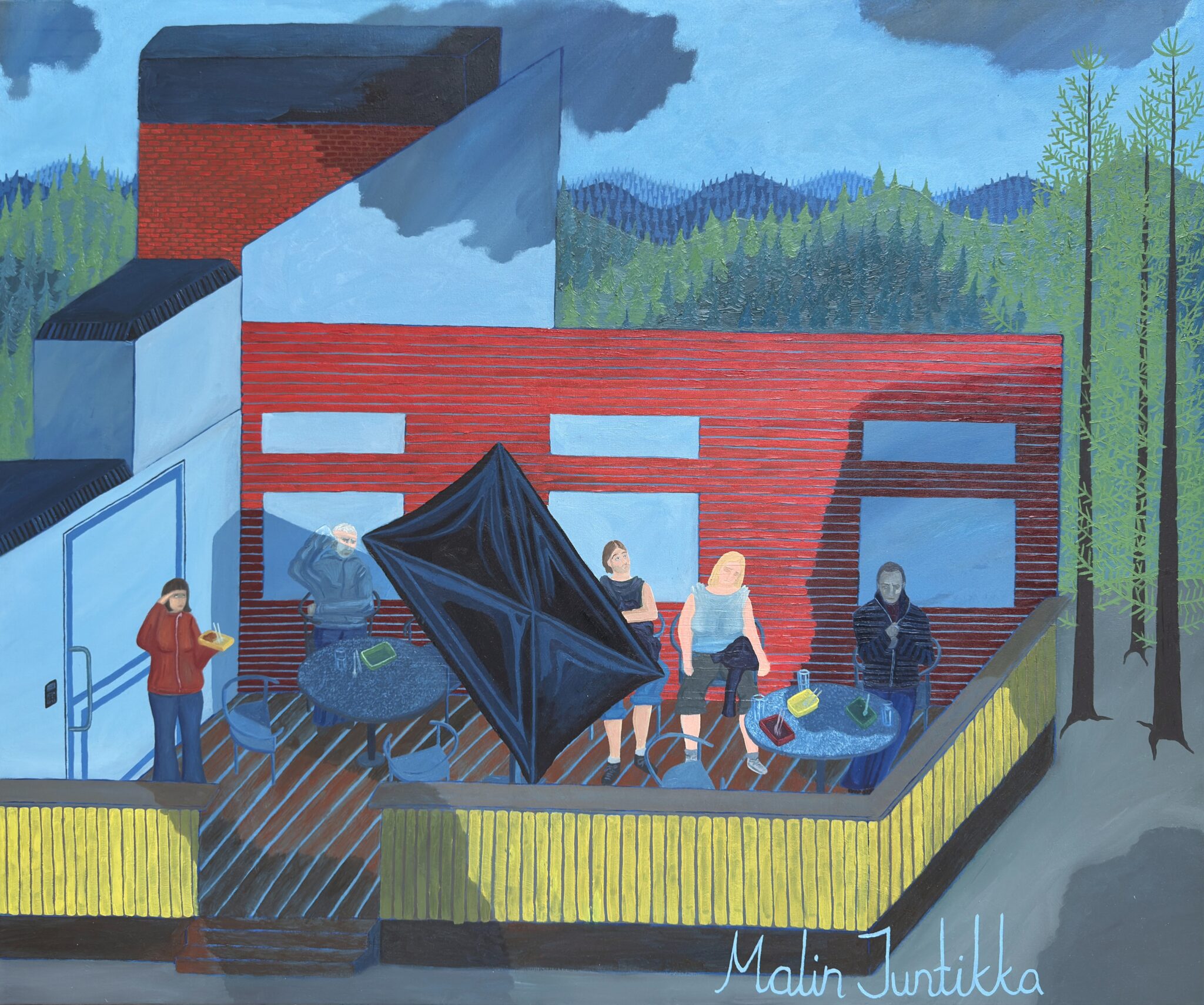
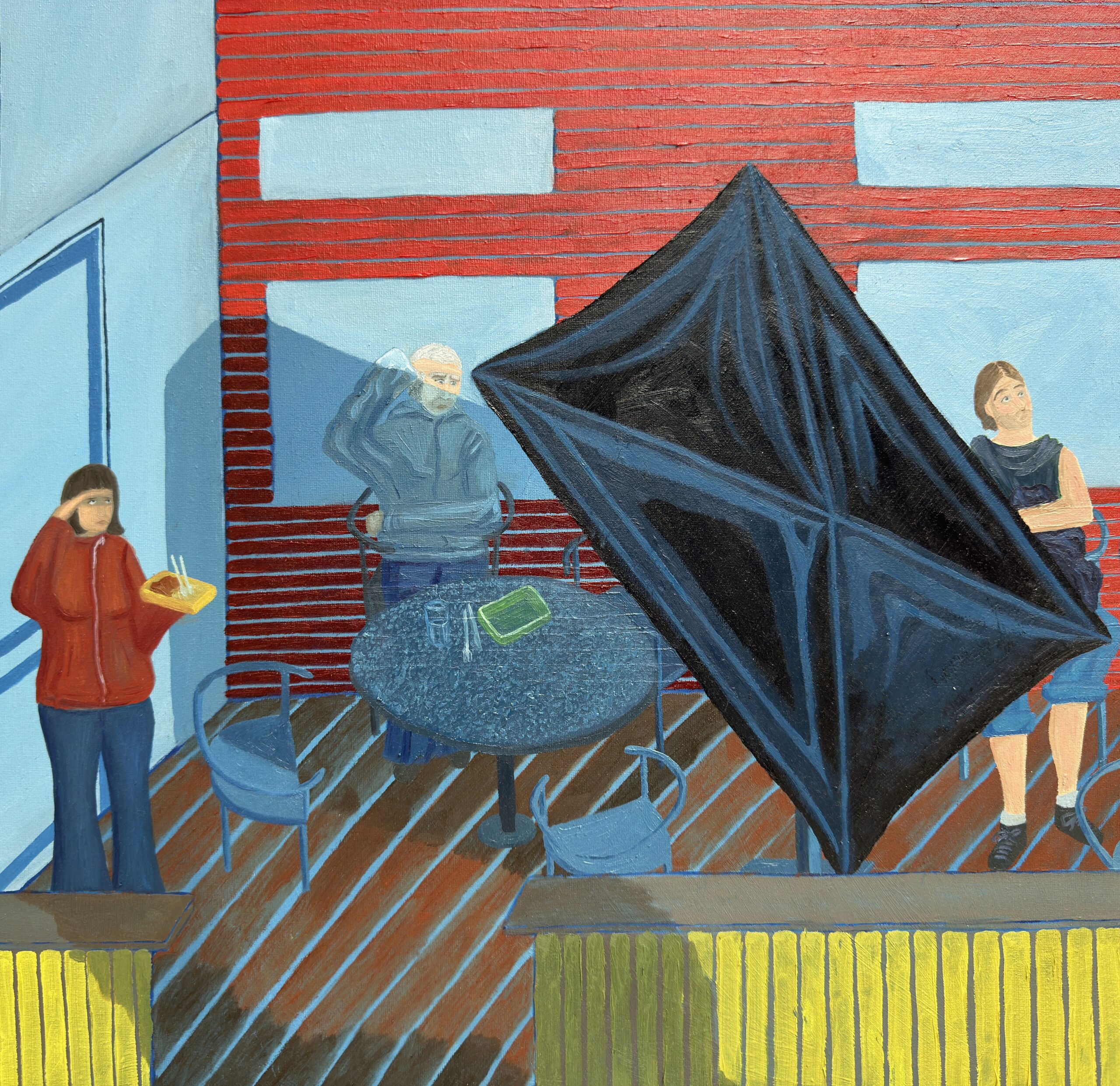
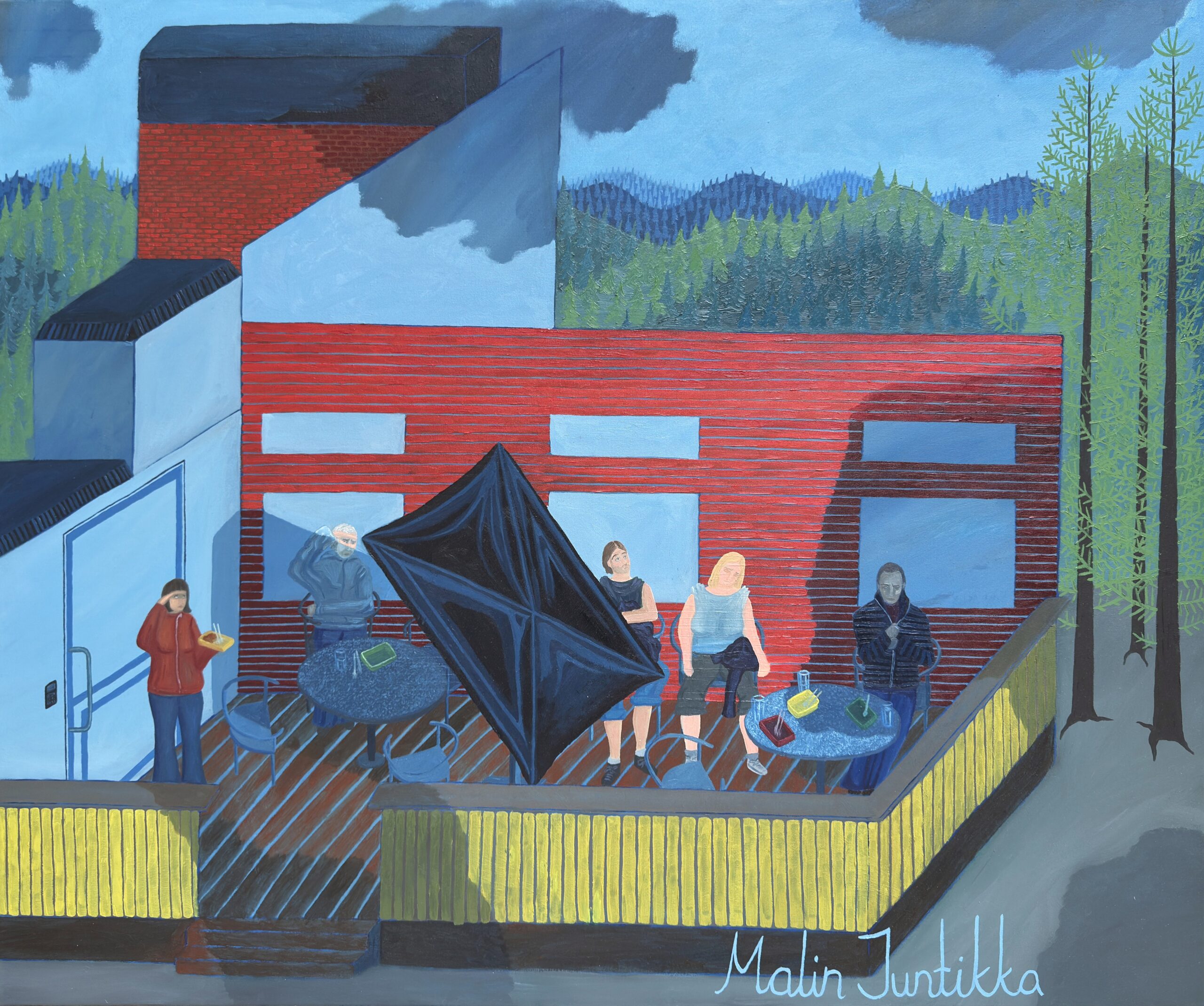
The Swedish summer. 2026. Oil on canvas. 100x120cm.
The story of
The Swedish summer
There once was a porch at an office in the north of Sweden. Some of the employees used to go there to make the most of Sweden’s few weeks of summer. Swedes have a problematic relationship with the sun during the summer. When you sit in the sun you will roll up your pants and shirt. Finally, you can enjoy yourself! But the enjoyment only lasts for a little while. As a matter of fact, the enjoyment will always be threatened by clouds. You will anxiously sit in your chair and wait for the next cloud to cover the sun. When the cloud has entered you will rapidly become cold and you are forced to put on your jacket again. That is how it goes, over and over again. The ones that decide to sit under the umbrella may have a more constant experience of temperature; however, it is very difficult to create an extensive shadow with the umbrella. Therefore, it is very difficult to enjoy the Swedish summer.
2025
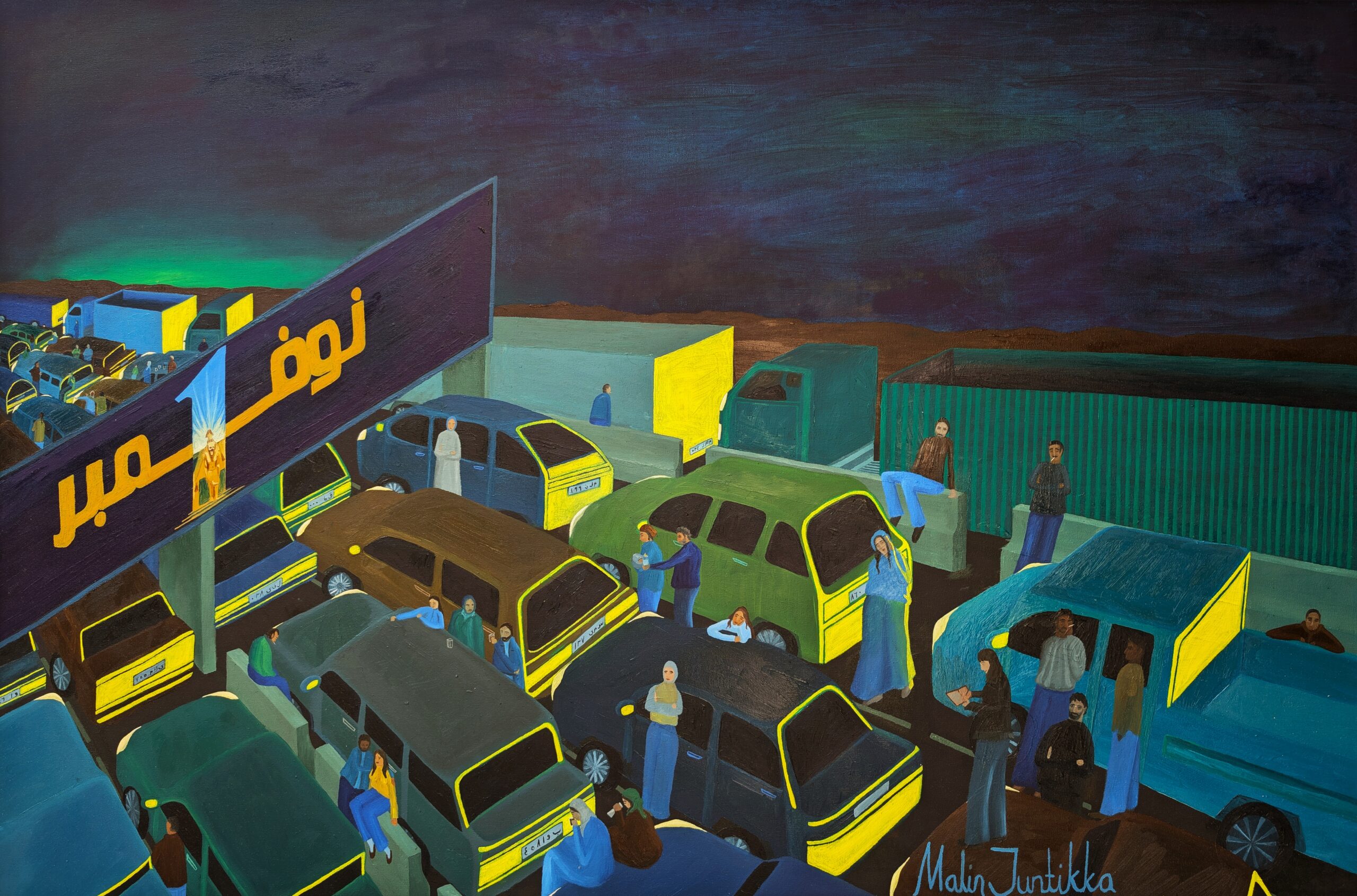
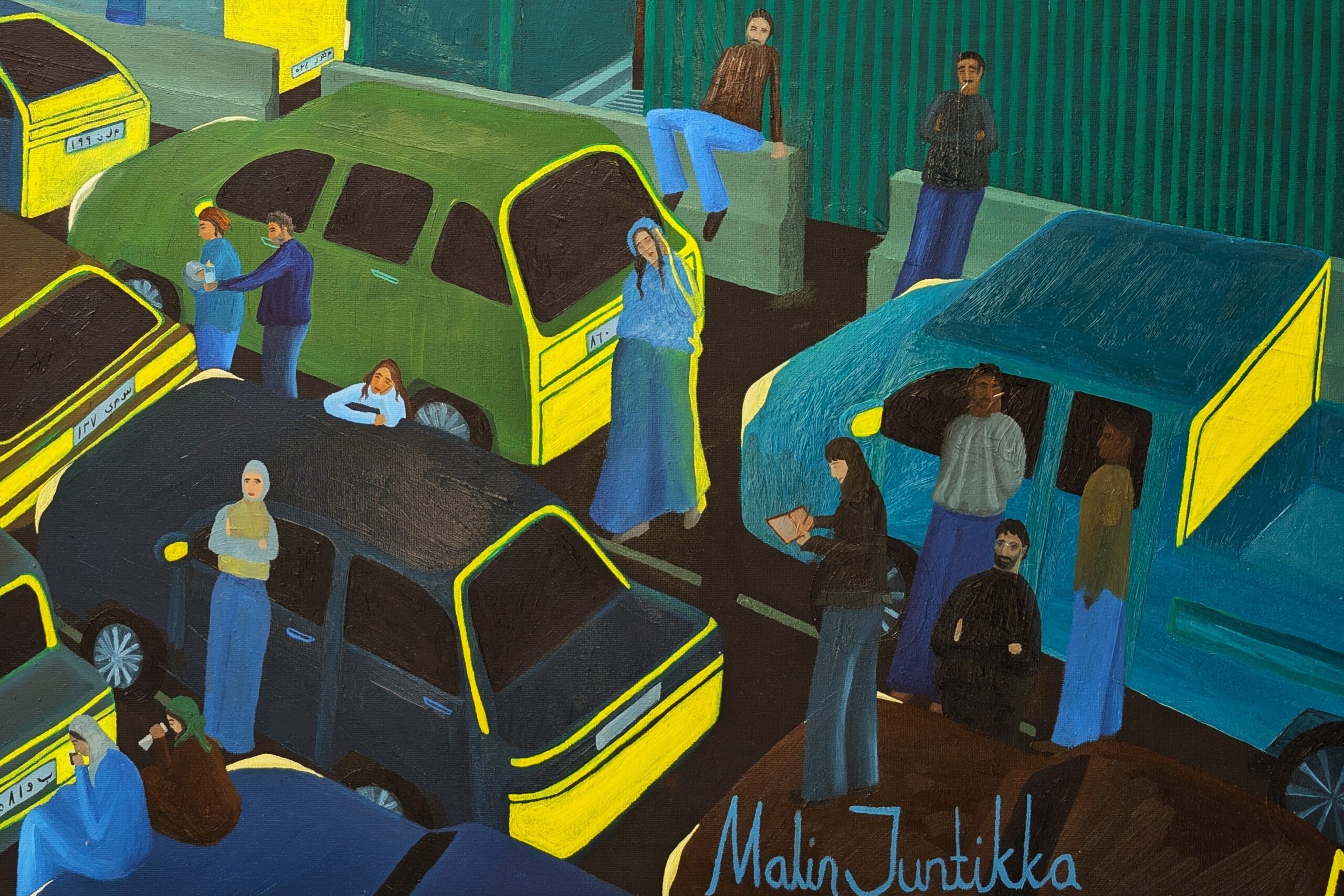
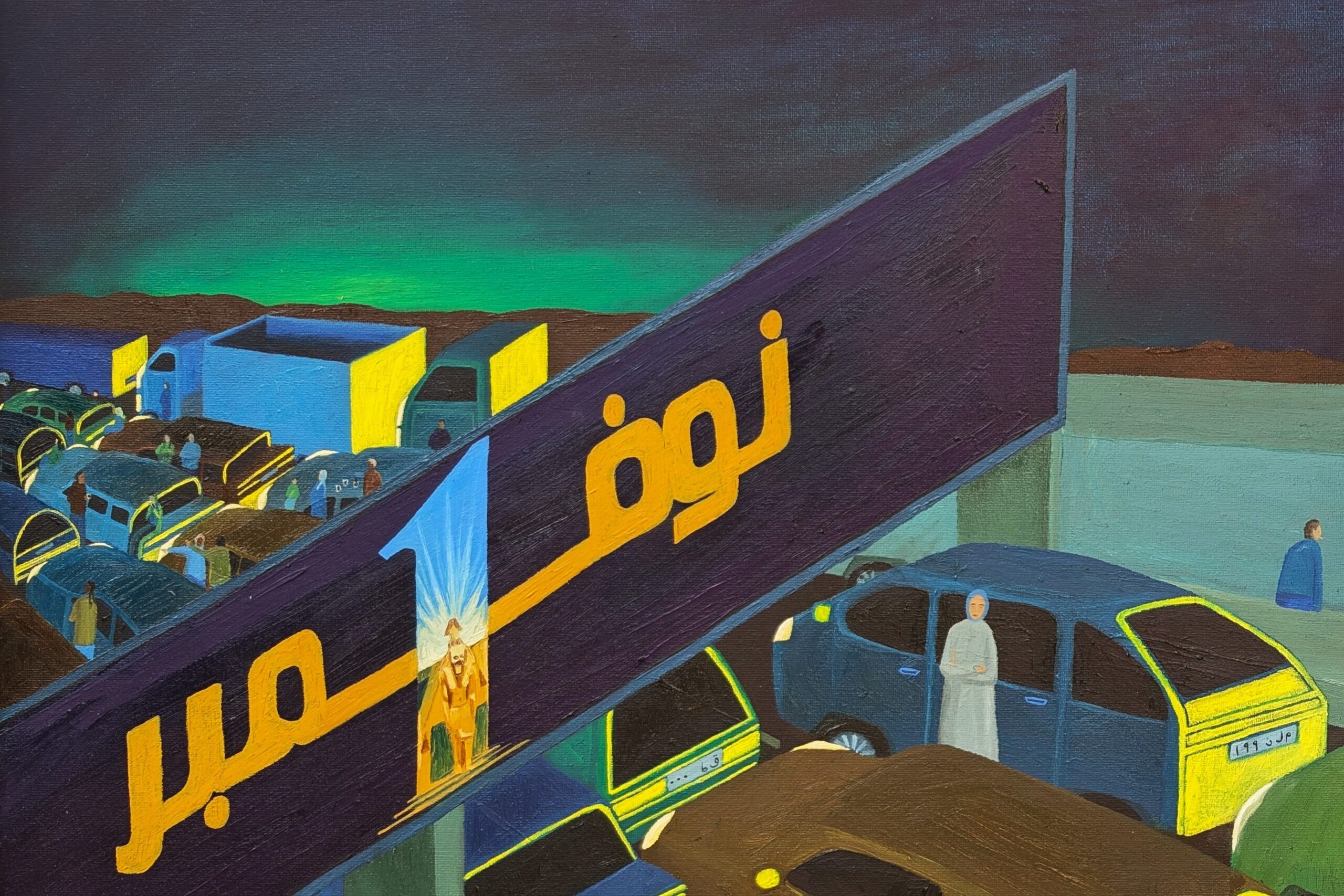
The community on the motorway. 2025. Oil on canvas. 80x120cm.
The story of
The community on the motorway
There once was a big motorway that ran between two big cities. One day, a newly constructed museum was going to have a spectacular opening ceremony. Presidents and royalties were invited. Some roads were closed and it became difficult for the traffic on the big motorway to flow. There was a traffic jam. As soon as the cars joined the traffic jam, everyone in the car exited. All of a sudden, a community had emerged on the motorway! When the cars further ahead started moving later, everyone applauded and jumped back into the cars.
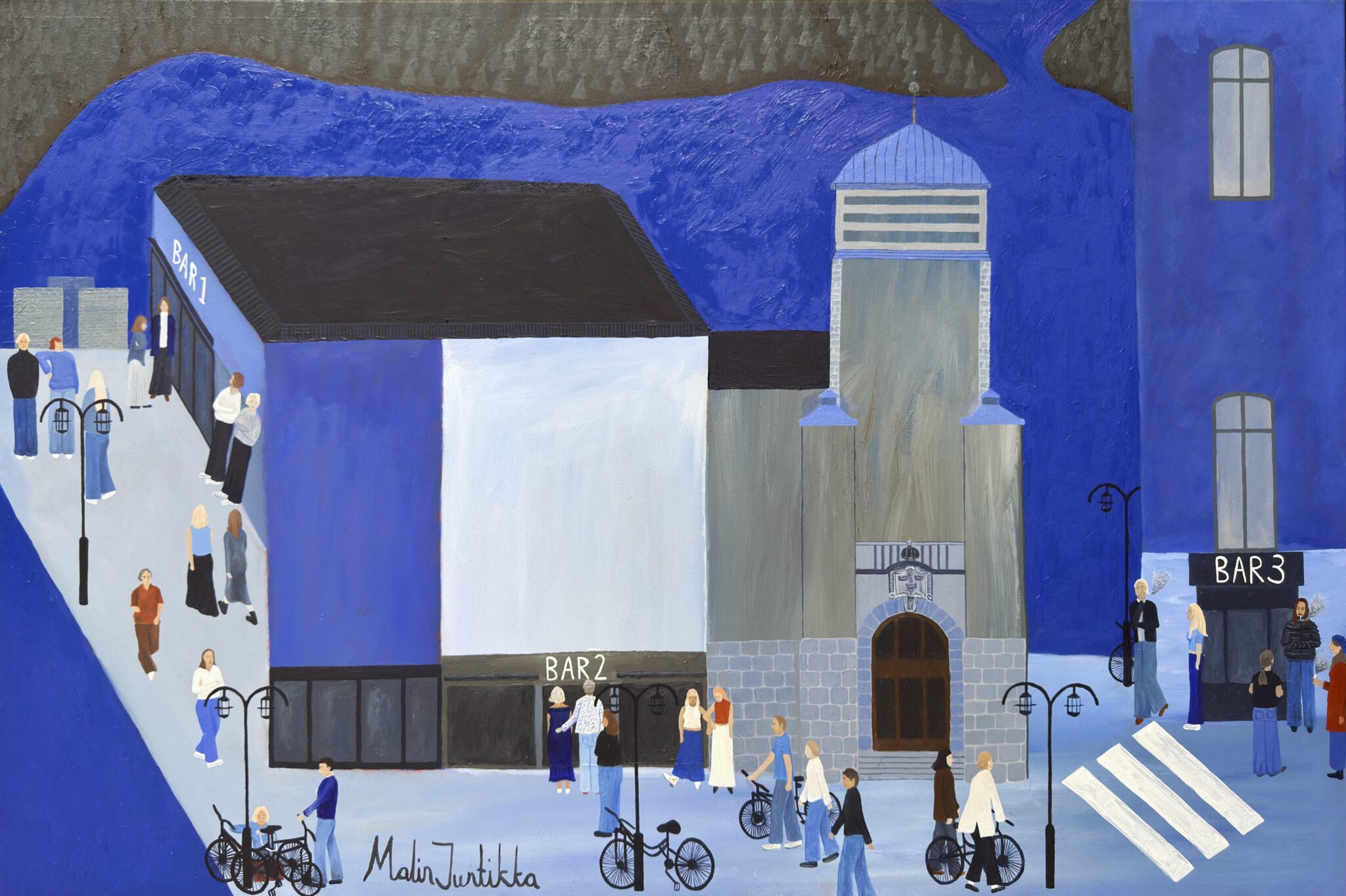
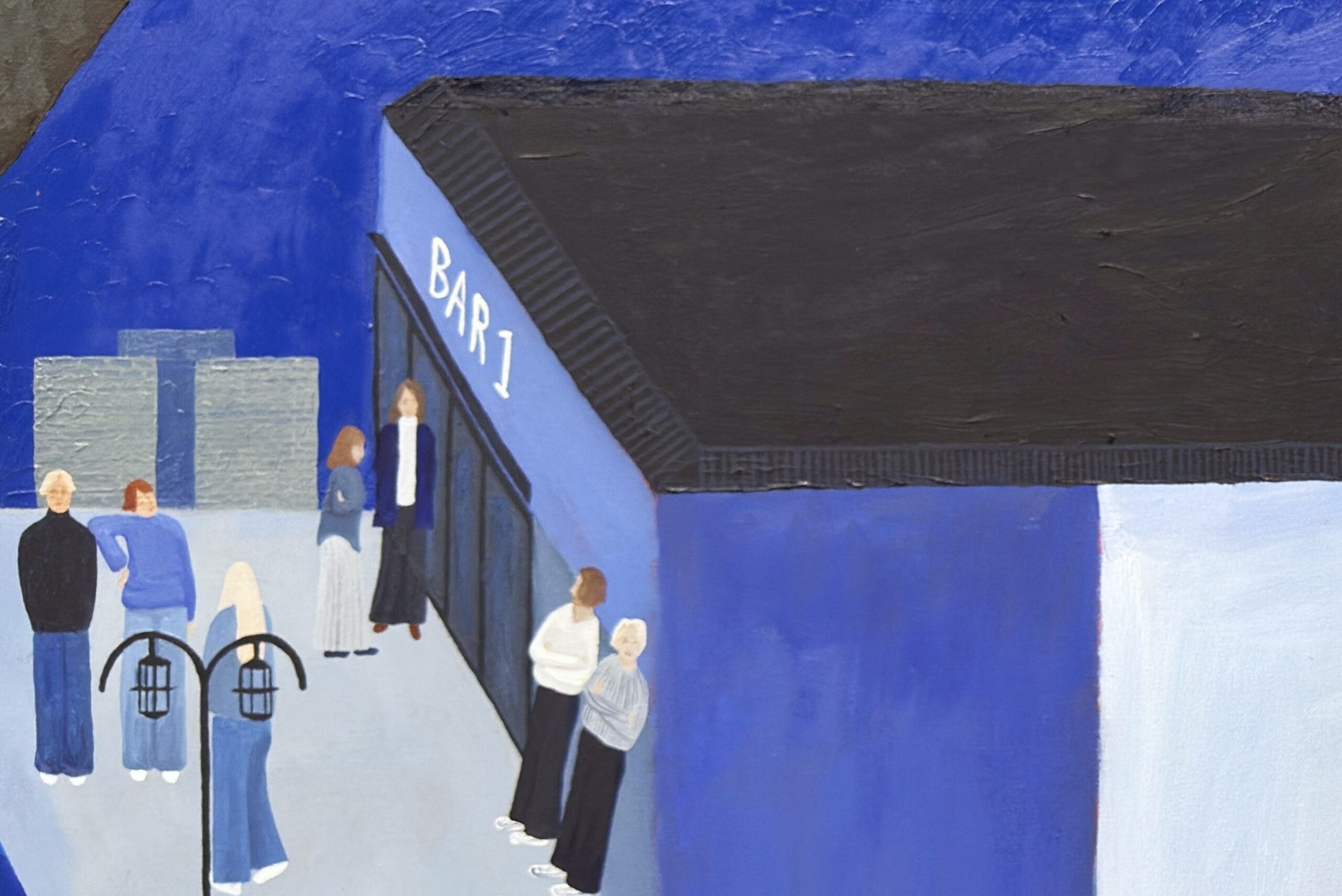
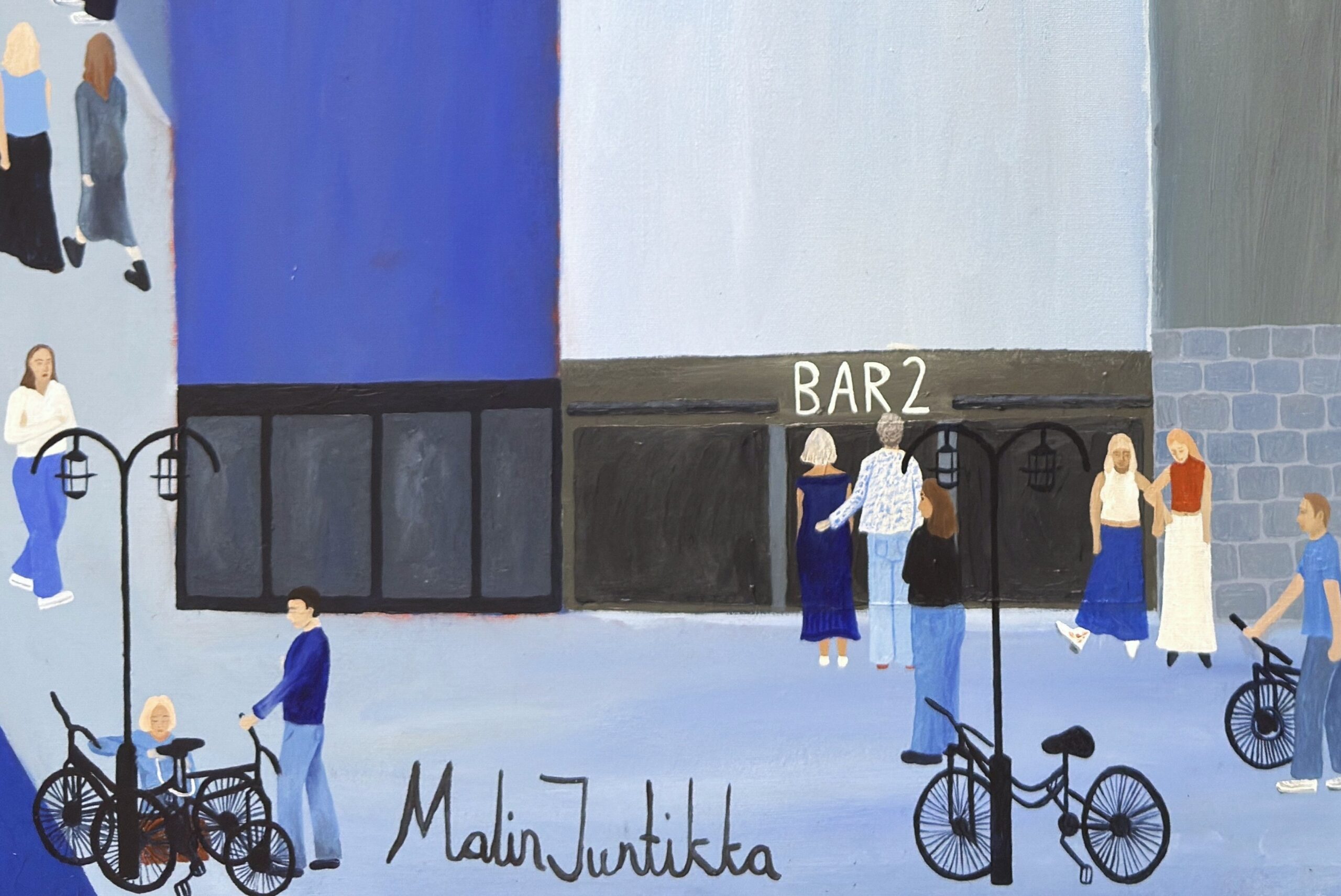
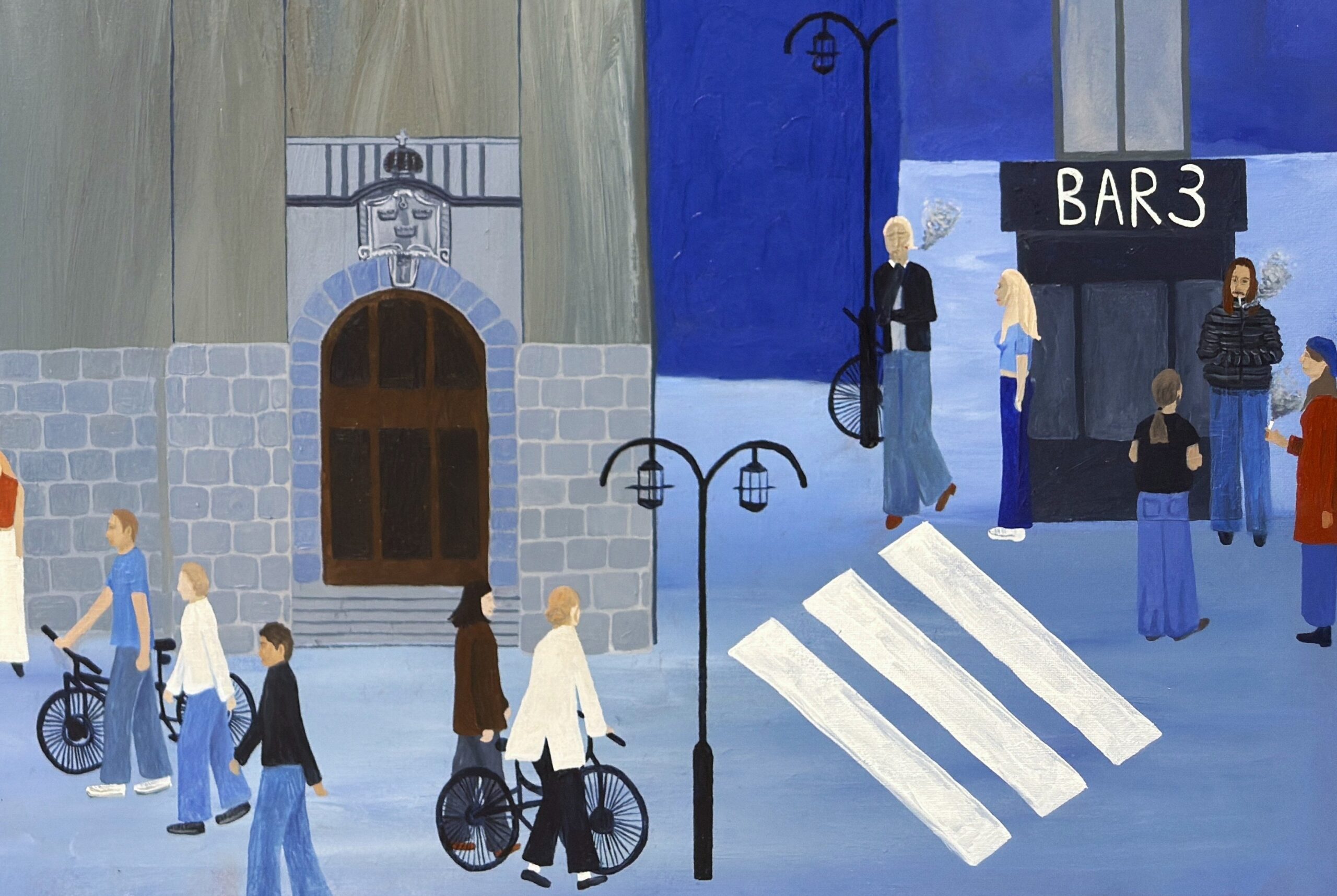
The three bars in the small northern coastal town. 2025. Oil on canvas. 80x120cm.
The story of
The three bars in the small northern coastal town
There once was a small coastal town in a northern country. On Friday and Saturday nights, the town residents would cycle down the mountains around the town to get to the bars. Bars were the only nightlife the northern country had to offer. The small town had three bars. Due to boredom, the evenings usually ended with the people wearily, yet cheerfully, circling between the three bars—constantly in search of a better bar.
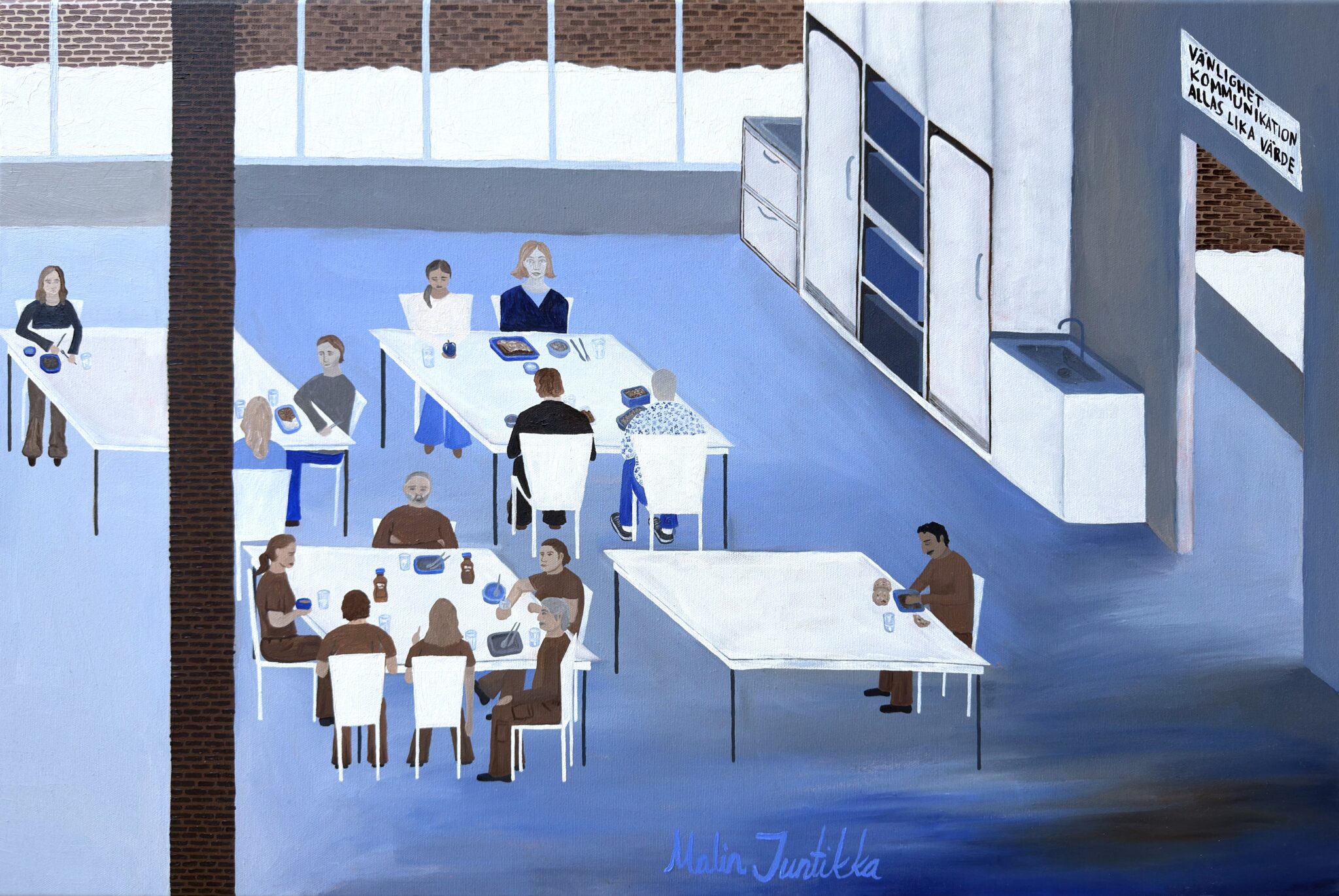
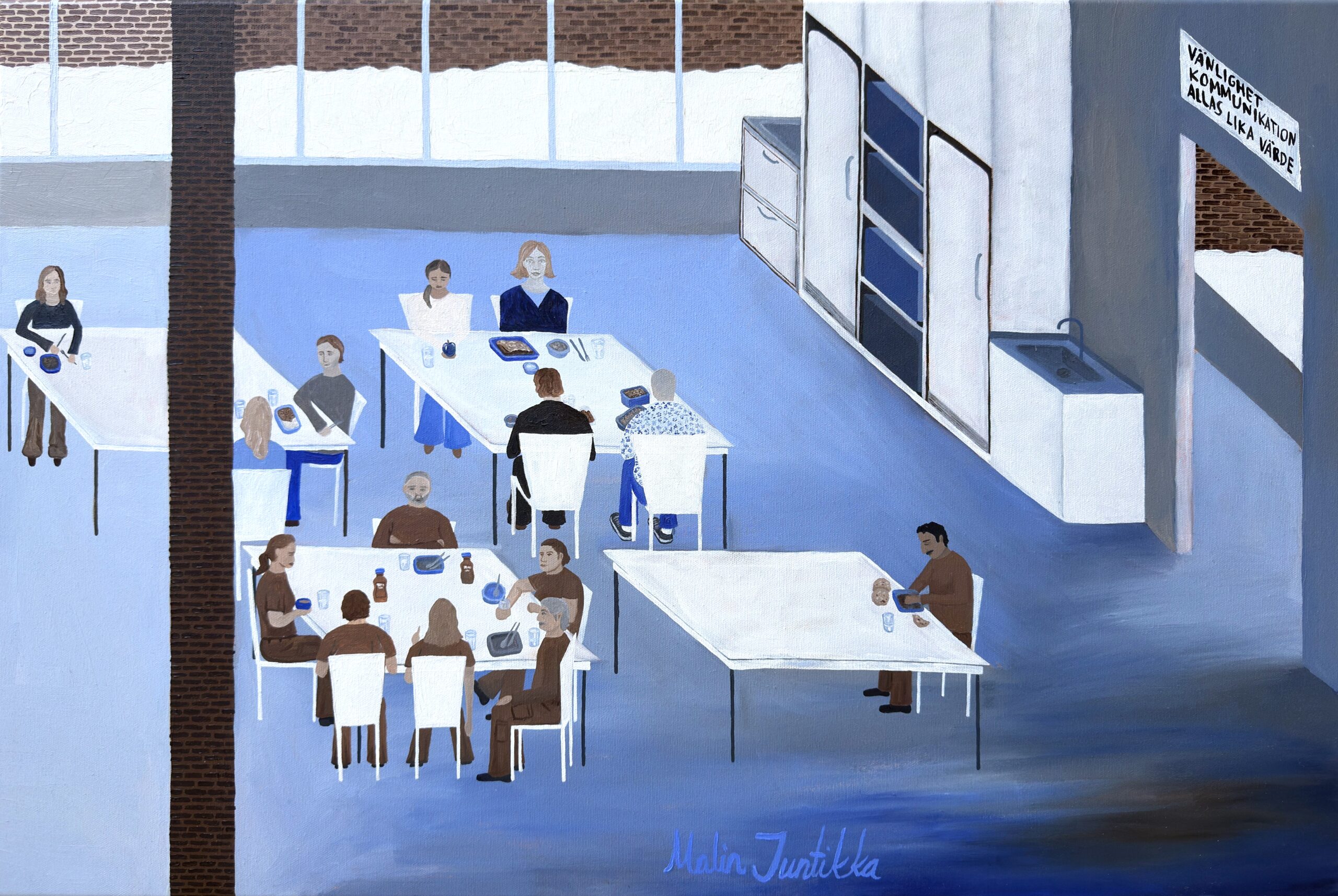
The Swedish lunchroom. 2025. Oil on canvas. 60x90cm.
A critique of
The Swedish lunchroom
There once was a lunchroom in an office in a small northern town. Between eleven and one o’clock, the employees go to the lunchroom to heat their lunch boxes in one of the microwave ovens. If someone forgets their lunch box, then the others do not share. If the blue-collar and the white-collar workers eat lunch at the same time, then they do not talk to each other. If you are not Swedish, then you do not get any lunch comrades. On one of the walls in the lunchroom, there is a sign that presents the value system of the office: friendliness, communication, and the equal value of everyone.
The analytical philosopher. 2025. Oil and acrylic on canvas. 70x100cm.
A critique of
The analytical philosopher
An analytical philosopher sits down to study in a café. She picks up an article to read. The article discusses properties, such as blueness. The analytical philosopher leans back in her chair, sighs, stares blankly at the street, and asks: What is blueness…?
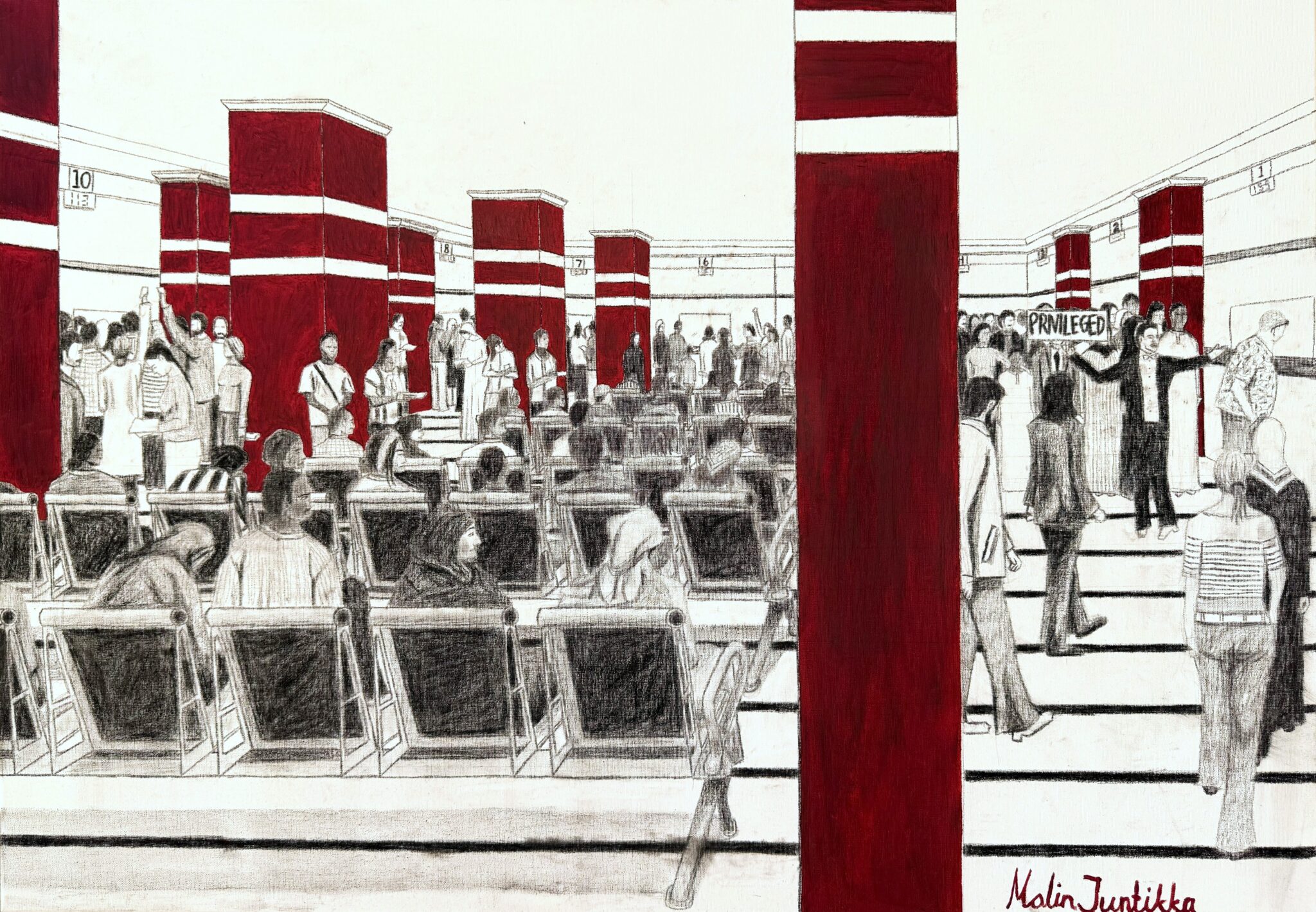
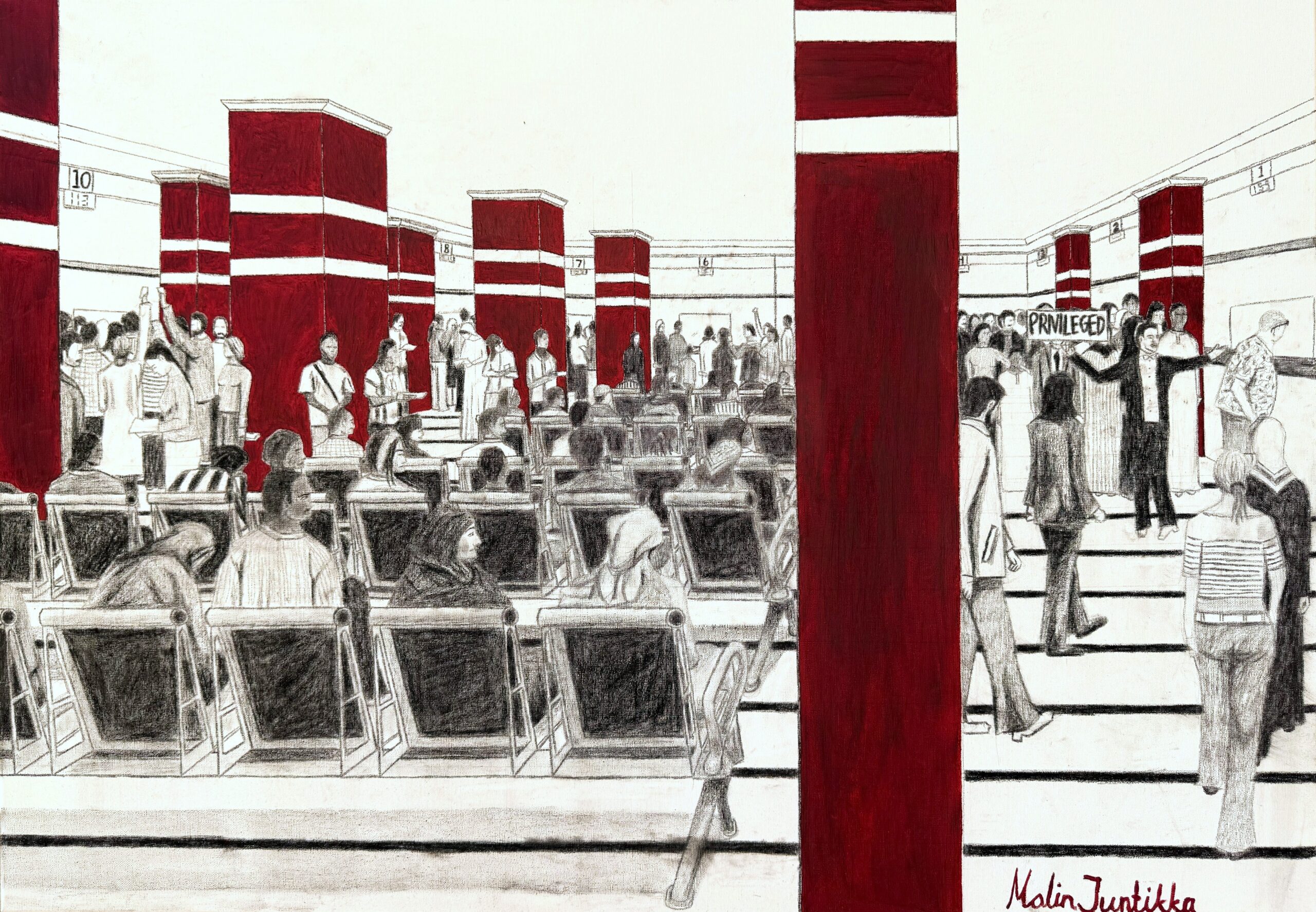
The corruption at the migration agency. 2025. Charcoal and oil on canvas. 70x100cm.
A critique of
The corruption at the migration agency
There once was a building in a big city where migrants go. From early morning until late evening, the halls of the building were filled with nervous people who hoped to leave the building with positive news as soon as possible. In a queue system, people first raced to the seats and then to the counters. Counter number one was the most frequently visited. It was the counter for visa applications. Suddenly, the queue system was interrupted by corruption. Privileged people paid to jump the queue ahead of unprivileged people. Some people have a more laid-back experience at the migration agency than others.
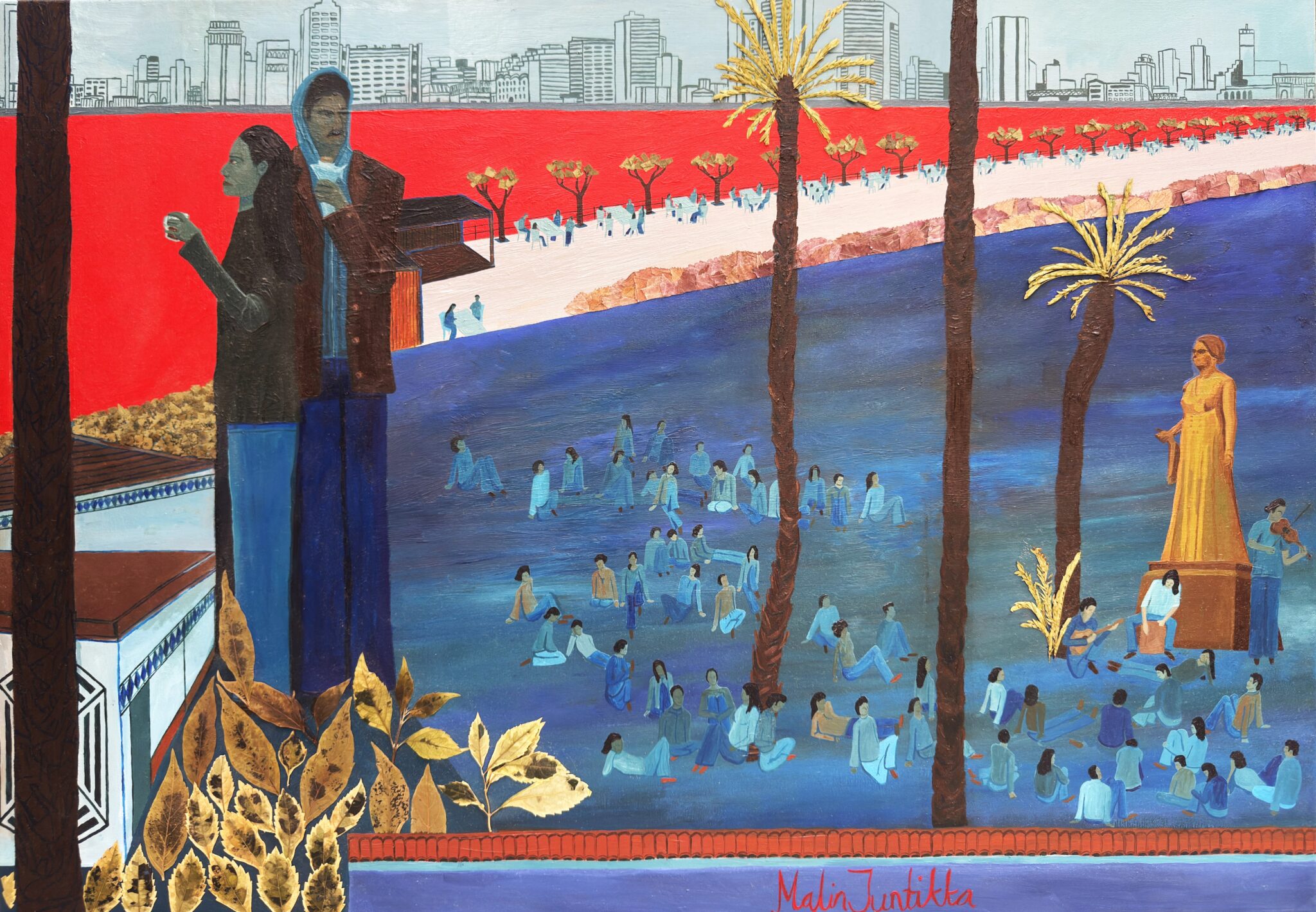
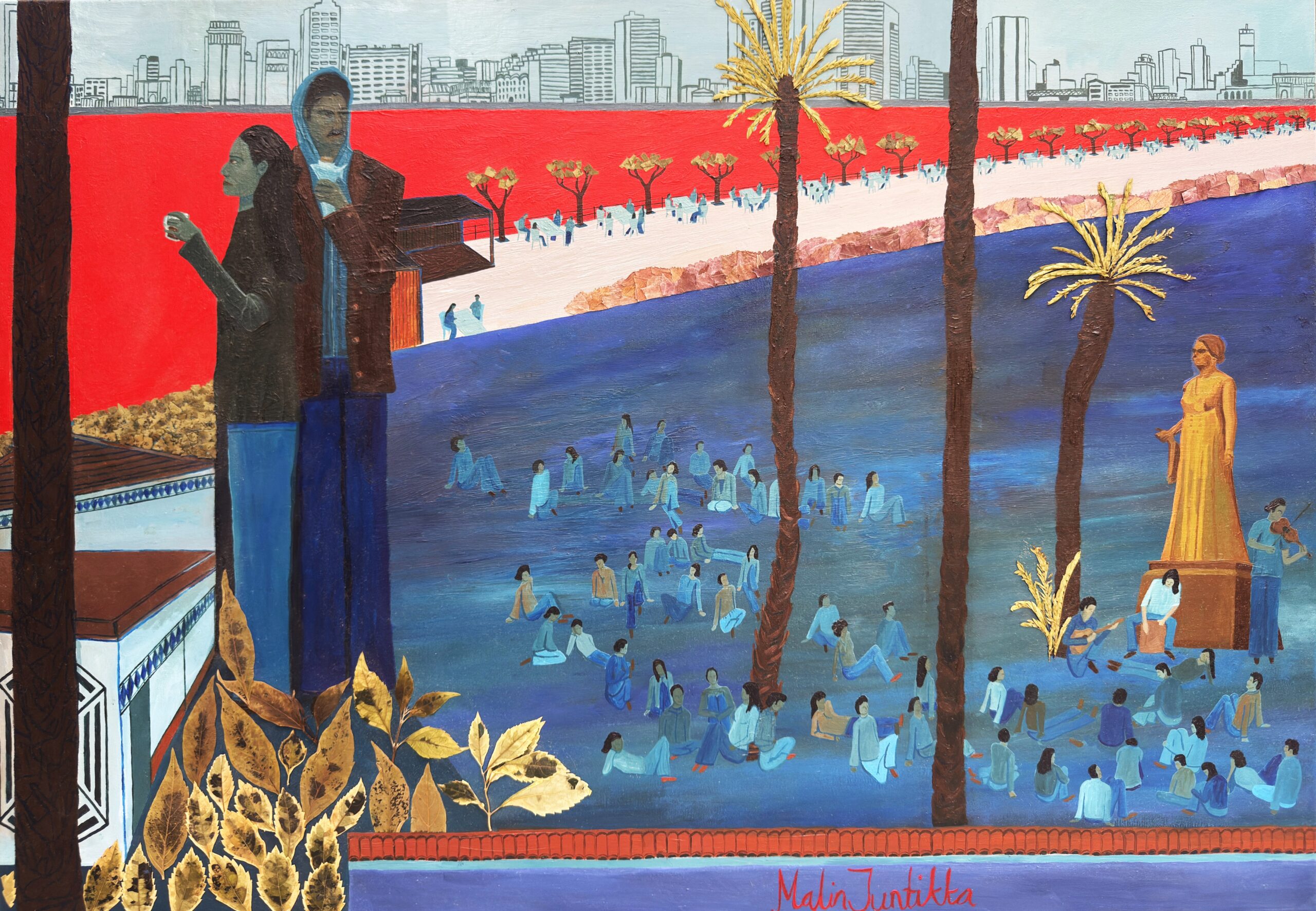
The park that was sold to a richer country. 2025. Oil and leaves from Umm Kulthum Park on canvas. 70x100cm.
The story of
The park that was sold to a richer country
There once was a park in a big city that everyone enjoyed. One day the park was sold to a richer country, and now it is gone.
In memory of Umm Kulthum Park.
2024
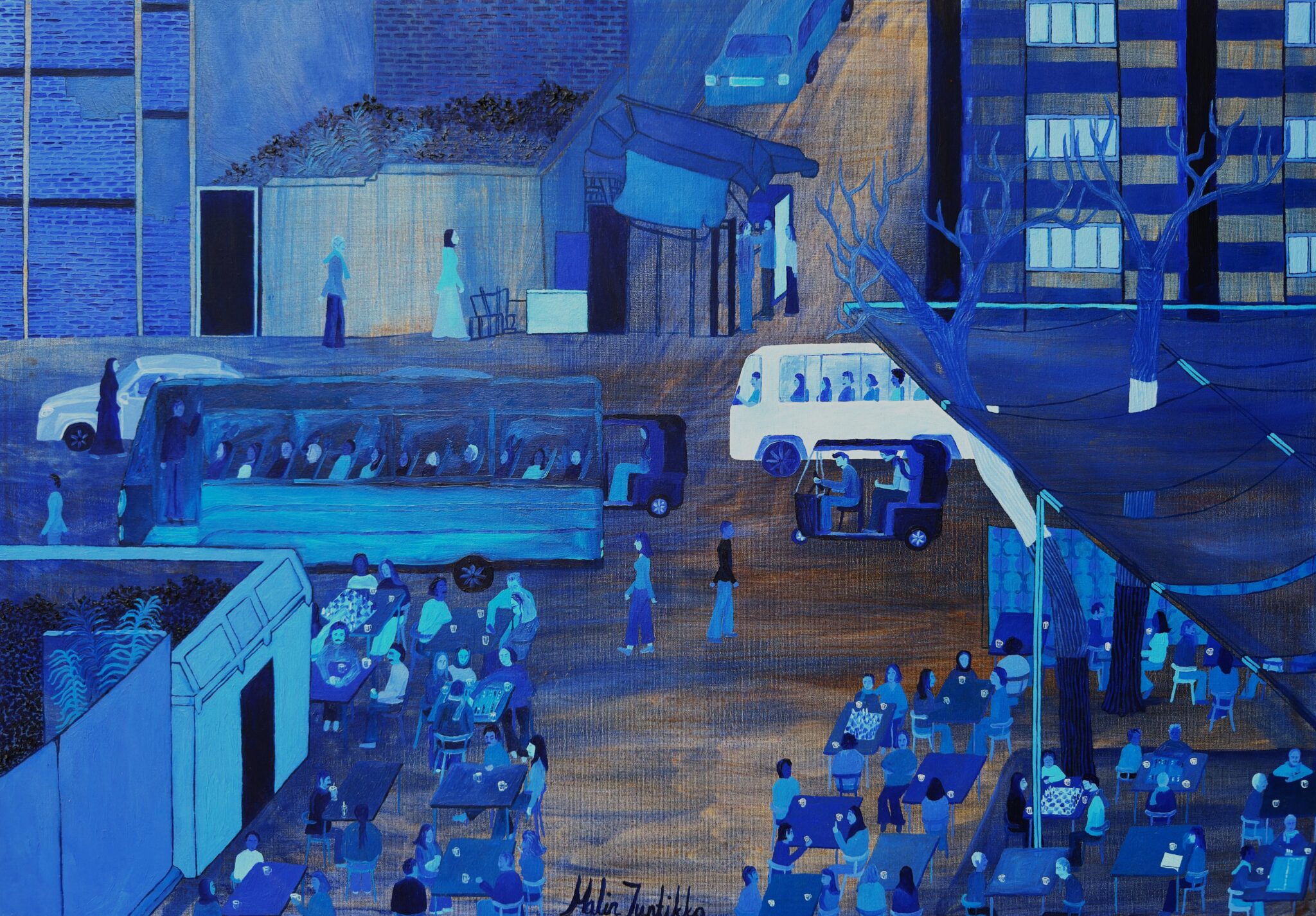
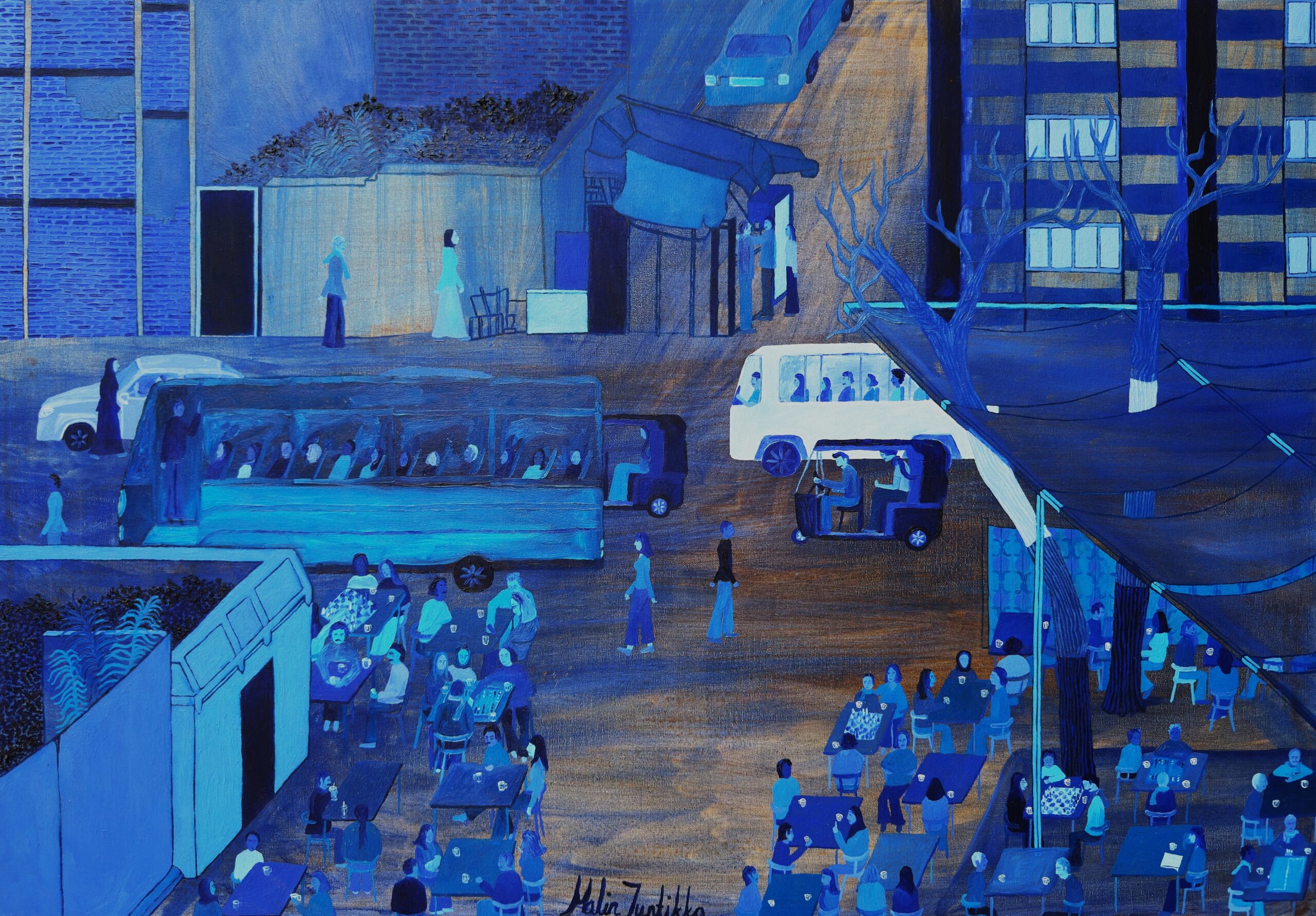
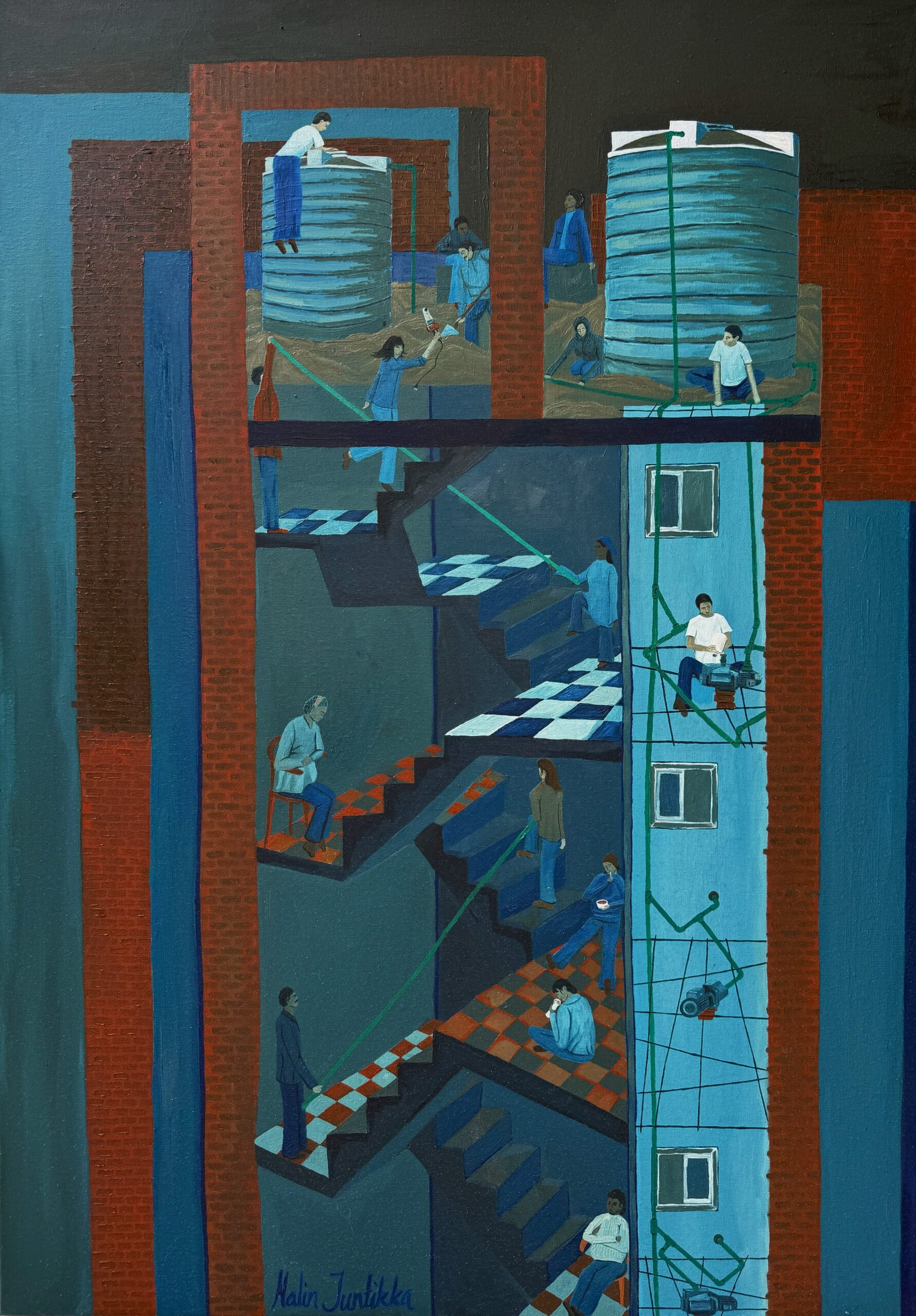
The two water tanks on the roof that were never filled. 2024. Oil on canvas. 70x100cm.
The story of
The two water tanks on the roof that were never filled
There once was a building on the outskirts of a big city. The building had been troubled with water problems for a long time. The apartment on the eleventh floor was the most troubled. During the nights, the comrades of the building gathered to solve the water problem. Some nights, they called in a plumber. Then everyone worked according to the instructions of the plumber. Even on this night, someone had come up with the final water solution, like every other night. The comrades of the building and the plumber worked for several hours. When the system of water pipes was complete, they turned on the water motor on the eleventh floor. Nonetheless, the two water tanks on the roof haven’t been filled this night either.
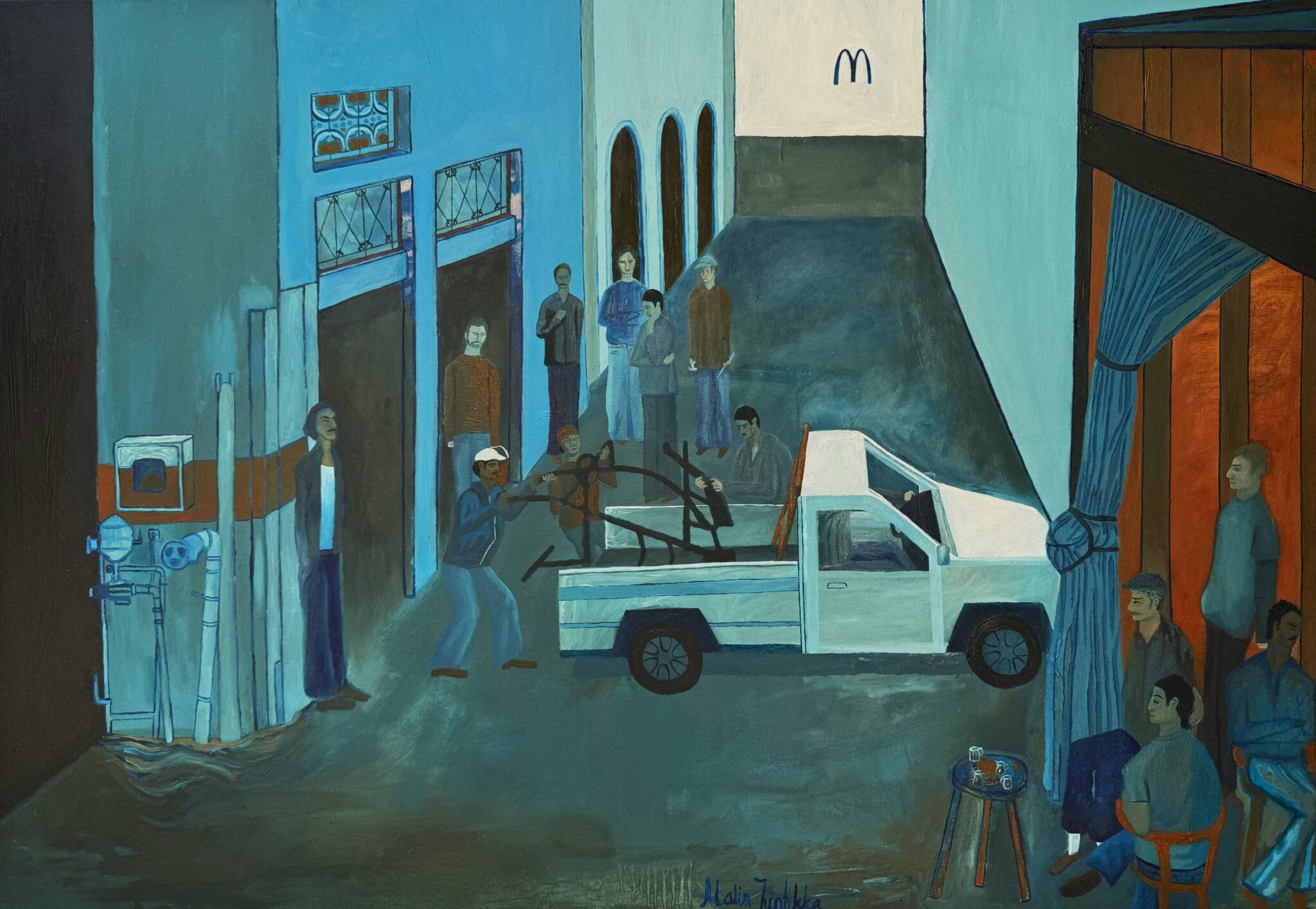
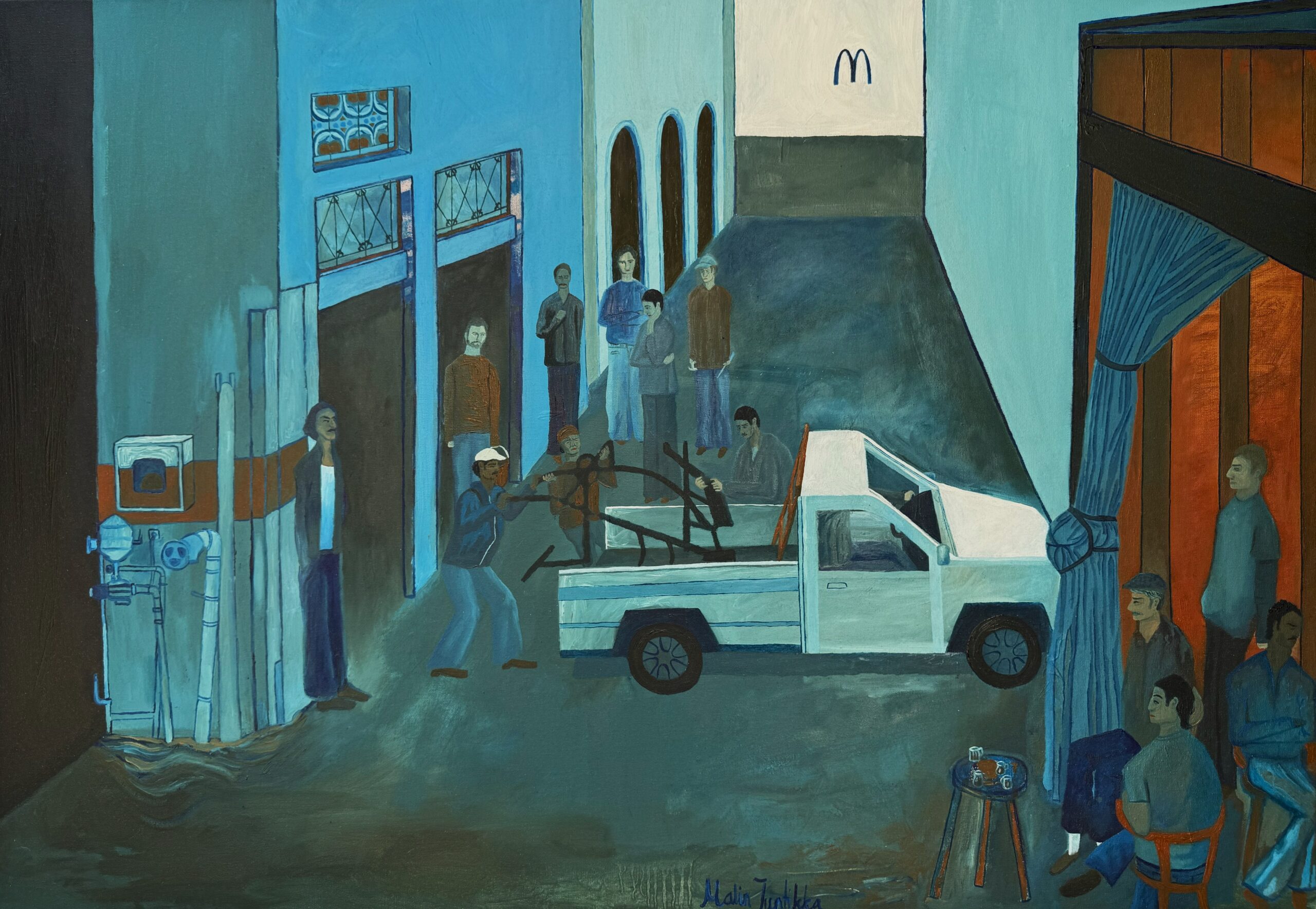
The ten workers that were to lift a scrap car onto a flatbed truck. 2024. Oil and acrylic on canvas. 70x100cm.
The story of
Ten workers that were to lift a scrap car onto a flatbed truck
There once was an alley that few knew about. The charm in cities is directed towards the sights that the authorities choose. The alley contained two attractions—a simple café and a simple car repair shop. The two places interacted in such a way that the café guests were amused by the workers, and the workers were encouraged by the café guests. One day, ten workers were to lift a scrap car onto a flatbed truck. When the workers were troubled, the café guests were on the edge in their chairs. The two sides of the alley glanced at each other. Fortunately, the workers conquered their distress and managed to lift the scrap car onto the flatbed truck. Both sides cheered, and the workers went across the alley and ordered coffee. It turned out that the café guests were the workers’ comrades who had gone on a break.